Implementing Shift-Left Testing

 Check Your YAML Before It Checks You
  The Long Road Ahead
  Python Support Has Arrived
Last Updated: January 9, 2019
This blog entry continues our series about shift-left testing.
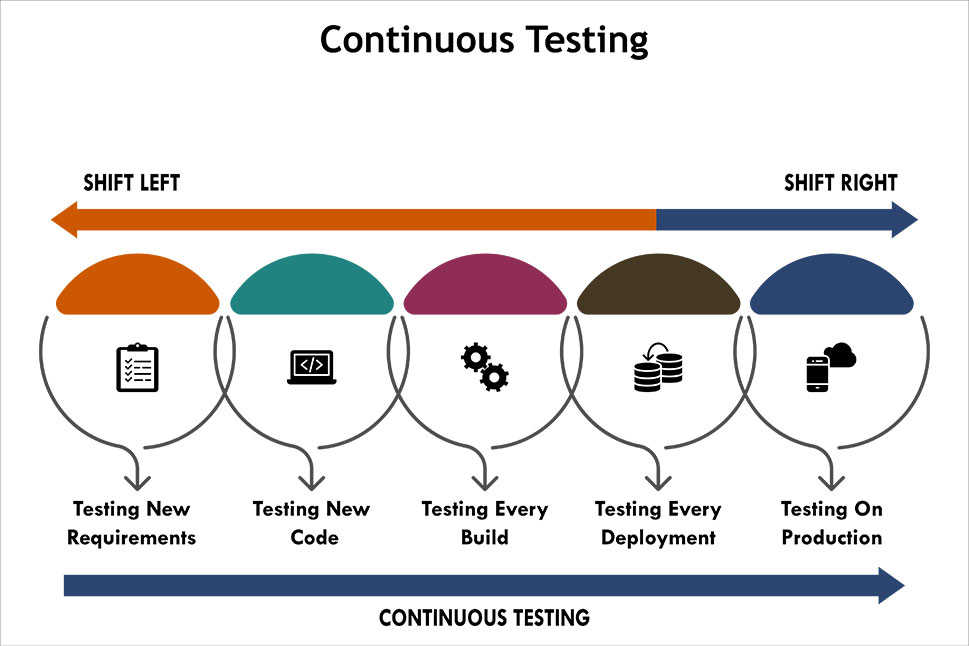
Our earlier post introduced shift-left testing and the concepts and methodologies behind it, along with the benefits it brings to your team. You can read more about the history of shift-left testing, here.
This post is all about how to implement shift-left testing into your development workflow.
Understanding shift-left testing and knowing its benefits are one thing, but actually getting your team to implement the concept can be tricky. Especially if they’re familiar with other development workflows.
With the waterfall method of development, testing occurs last, or to the far right of the development process. When testing occurs at the end of the development process you risk having to backtrack to redo work, or worse, ignore minor bugs and push them live.
Shift-left testing recognizes that testing needs to occur earlier and more often in the development process.
Here are some things your team can do to easily implement shift-left testing.
The first thing you’re going to have to do to get your team to start shifting-left is, to get everybody on board.
Present your team with a brief history of the Kaizen philosophy, and explain how it influences the shift-left methodology. Then, explain the benefits of shift-left testing, like how it saves your organization time and money and increases cross-team collaboration. Be sure to use our previous blog posts as reference materials!
Once everybody is on the same page, it should be a lot easier to begin transitioning into the shift-left testing methodology.
Next, establish clear roles and responsibilities within your team.
This is important because shift-left testing is a collaborative effort. Previously, it was only the responsibility of the QA team to test products for quality. Now, shift-left testing requires developers to become testers, QA teams to be authenticators, and PM’s become a source of constant feedback.
When developers learn to test their work earlier and more often, QA teams can get busy building out a set of quality standards and parameters, while project managers can show updated versions of the project to clients and offer feedback more quickly.
Finally, find the best tools for you and your team.
Continuous integration tools help teams automate their testing process so that project changes can be made quicker and at scale. Automating the testing process allows developers to test more frequently and ensures that errors can be found sooner rather than later.
There are many CI tools available and it is up to you to determine which tool is best for your team’s workflow.
In addition to Probo, some popular CI tools include Jenkins, Travis CI, and Circle CI. When choosing a CI tool to implement into your development workflow you should consider the tool’s hosting requirements, your budget, features, and the overall return on investment for your organization.
After speaking with your team, establishing roles and responsibilities, and choosing the right tools, implementing shift-left testing to your development workflow should be seamless.
Remember that altering an entire teams methodology can be tricky, but this blog series should equip you with the knowledge you need to make a smooth transition to shift-left testing.

When you sign up for a Probo.CI registration code, you will get a two week trial of the plan of your choosing. For more information on how to get started, click here .
LEARN MORE ABOUT PROBO.CI'S PRICING